

On this page
- Why in News?Booker Prize 2026: M. John Harrison Wins for The End of Everything
- Static-Current Linkage: The Evolution of Literature, Dystopian Narratives, and Cultural Philosophy
- Prelims Focus: High-Yield Objective Facts
- Mains Analytical Breakdown
- Way Forward
- Value Addition for Mains and Essay
- Practice Questions for Active Recall
UPSC Syllabus Mapping:
General Studies Paper I (Indian Heritage and Culture / World History): Salient aspects of Art Forms, Literature, and Architecture from ancient to modern times; History of the world including social and philosophical developments.
General Studies Paper IV / Essay: Philosophical essays exploring existentialism, humanity in crises, technology and ethical limits, literature as a reflection of societal anxieties.
Why in News?Booker Prize 2026: M. John Harrison Wins for The End of Everything
British author M. John Harrison won the 2026 Booker Prize for Fiction for his satirical post-apocalyptic novel, The End of Everything.
At 81 years old, Harrison became the oldest author in the history of the Booker Prize to receive the honor. Notably, The End of Everything marked the first time a predominantly science fiction work secured the £50,000 literary award, breaking long-standing institutional genre barriers in mainstream Anglophone literature. The judging panel, chaired by classicist Dame Mary Beard, unanimously recognized the work for capturing contemporary civilizational anxiety and the collapse of human explanation in a fragmented world. Booker Prize 2026: M. John Harrison Wins for The End of Everything
Static-Current Linkage: The Evolution of Literature, Dystopian Narratives, and Cultural Philosophy
For UPSC Civil Services, major literary milestones are evaluated through the prism of cultural evolution, sociology of literature, and philosophical inquiries into human nature during crisis.
The Booker Prize and International Booker: Institutional Architecture
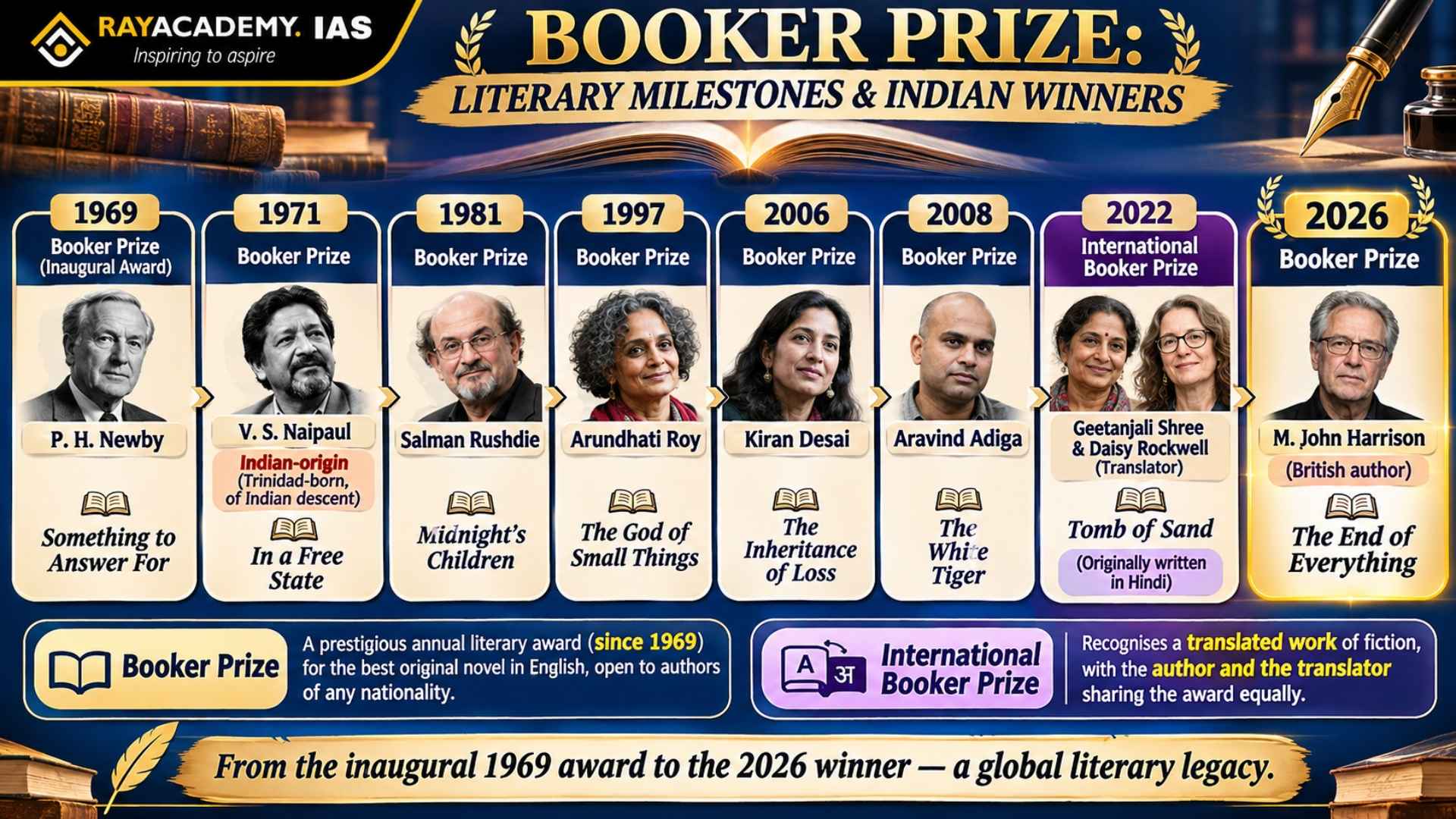
Established in 1969 in the United Kingdom, the Booker Prize is awarded annually to the best sustained work of fiction written in English and published in the UK or Ireland. Originally restricted to citizens of the Commonwealth, Ireland, and Zimbabwe, eligibility rules were liberalized in 2014 to include any novel written in English, regardless of authorial nationality.
Aspirants must distinguish the core Booker Prize from its sister award:
The Booker Prize: Honors single works originally written in English.
The International Booker Prize: Established in 2005 (reconfigured in 2016), it honors fiction translated into English and published in the UK or Ireland, splitting the prize money equally between author and translator.
                    THE BOOKER PRIZE TRADITION
   ┌─────────────────────────────────────────────────────────────┐
   │ Booker Prize for Fiction (Est. 1969; Open globally 2014)    │
   │ • Criteria: Original fiction written in English             │
   │ • Landmark Indian / Diaspora Laureates:                     │
   │   - V.S. Naipaul (1971), Salman Rushdie (1981)              │
   │   - Arundhati Roy (1997), Kiran Desai (2006)                │
   │   - Aravind Adiga (2008)                                    │
   └──────────────────────────────┬──────────────────────────────┘
                                  ▼
   ┌─────────────────────────────────────────────────────────────┐
   │ 2026 Paradigm Shift: M. John Harrison (*The End of Everything*)│
   │ • First science fiction / weird fiction novel to win        │
   │ • Dissolving traditional "genre walls" in high literature   │
   │ • Mirrors modern polycrisis: climate, war, epistemological collapse│
   └─────────────────────────────────────────────────────────────┘
Speculative and Dystopian Fiction as Societal Barometers
Dystopian literature has historically evolved as an artistic counterweight to totalitarianism, industrial dehumanization, and technological hubris.
Early 20th-century classics—such as Aldous Huxley’s Brave New World (1932) and George Orwell’s 1984 (1949)—critiqued state surveillance and state-directed ideological conformity.
In contrast, late 20th and 21st-century speculative fiction (from J.G. Ballard to Margaret Atwood) critiques environmental collapse, technocratic alienation, and the fragmentation of truth.
Harrison’s The End of Everything exemplifies this transition: rather than depicting a cinematic apocalypse, it illustrates what the author calls "epistemological and explanatory collapse"—the quiet dissolution of social certainties when ordinary systems fail.
Prelims Focus: High-Yield Objective Facts
Dimension / Parameter | Key Details for UPSC Prelims |
Award & Year | Booker Prize for Fiction (2026) |
Winning Novel | The End of Everything (published by Serpent's Tail / Profile Books) |
Author | M. John Harrison (British speculative fiction writer; aged 81) |
Prize Purse | £50,000 (approx. $67,000) |
First-Ever Milestone | First science fiction / post-apocalyptic novel to win the Booker Prize |
Oldest Laureate Record | M. John Harrison surpassed Margaret Atwood (who won at 79 in 2019 for The Testaments) |
Eligibility Criteria | Any novel written originally in English and published in the UK or Ireland |
Chair of 2026 Judges | Dame Mary Beard (British classicist and cultural historian) |
Indian Winners (Booker) | Salman Rushdie (Midnight’s Children, 1981), Arundhati Roy (The God of Small Things, 1997), Kiran Desai (The Inheritance of Loss, 2006), Aravind Adiga (The White Tiger, 2008) |
Indian Winner (International Booker) | Geetanjali Shree (2022) for Tomb of Sand (translated from Hindi Ret Samadhi by Daisy Rockwell) |
Mains Analytical Breakdown
Significance of the 2026 Literary Landmark
Dismantling Elitist Literary Hierarchies: For decades, mainstream literary academies dismissed science fiction and weird fiction as commercial pulp. Harrison’s win validates speculative genres as serious mediums for profound philosophical and social inquiry.
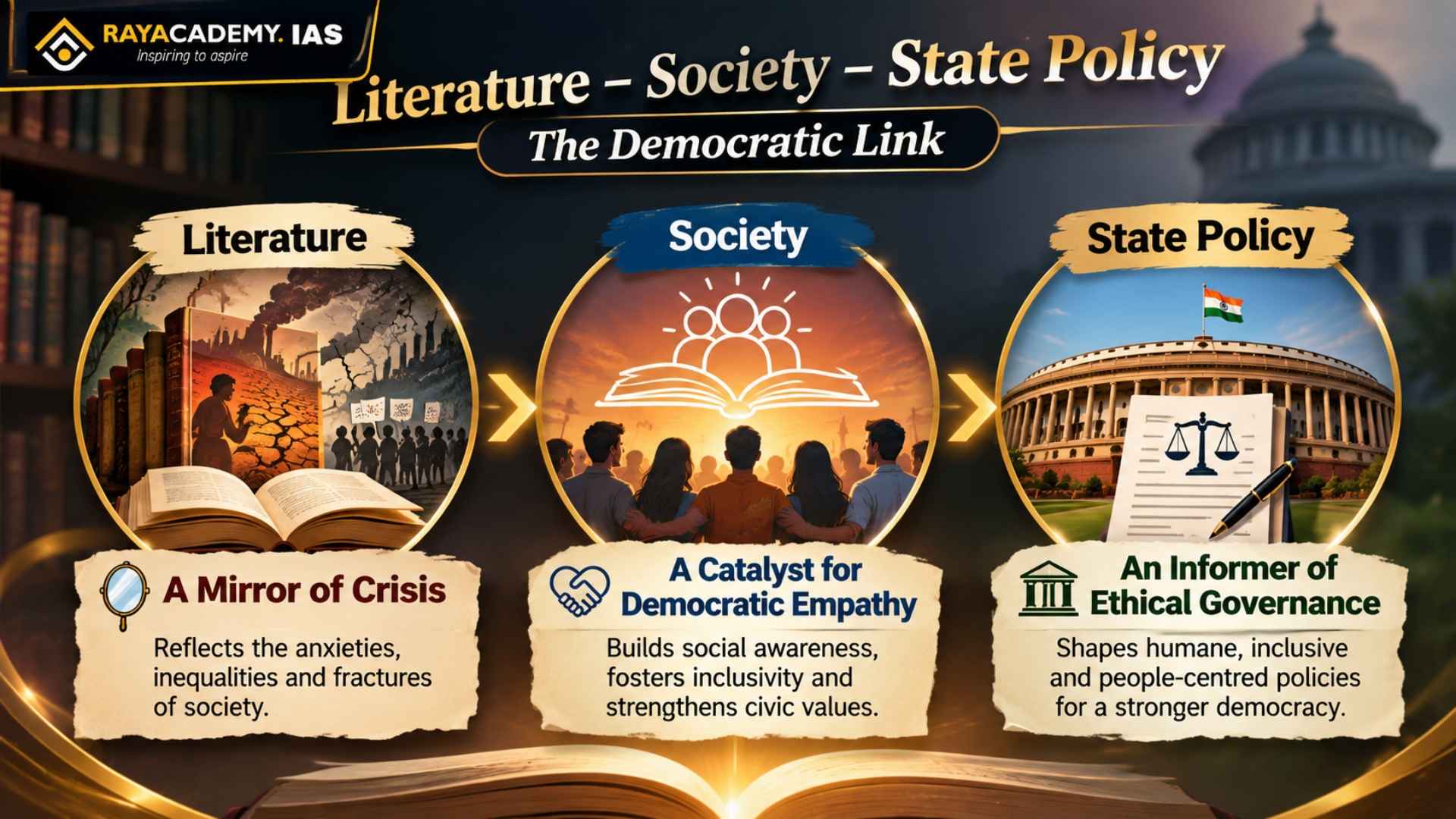
Mirroring Modern Geopolitical and Climate Anxieties: Literature functions as an archive of human consciousness. The End of Everything resonates with a world grappling with continuous "polycrisis"—ecological breakdown, military conflicts, rapid artificial intelligence deployment, and geopolitical fragmentation.
Promoting Non-Didactic Narratives: Unlike classic didactic dystopias, contemporary speculative fiction embraces ambiguity, teaching readers to navigate uncertainty without relying on simplistic authoritarian formulas.
Multi-Dimensional Challenges
Commercial Monopolization in Global Publishing: Despite diversifying prize winners, global publishing remains heavily consolidated among multinational conglomerates, posing economic barriers for independent regional publishers across developing economies.
Marginalization of Vernacular and Indigenous Literature: Anglophone global prizes inevitably center the English language. Without sustained state patronage and translation infrastructure, rich regional traditions in Asia and Africa struggle for global recognition.
Cultural Homogenization vs. Polyphonic Storytelling: The global dominance of Western-centric speculative storytelling risks crowding out alternative non-Western cosmologies and indigenous ecological narratives of resilience.
The Existential Dilemma of Creative Arts in the AI Era: As Large Language Models generate automated prose, human literature faces structural questions about authenticity, originality, and the ethical protection of intellectual property.
                  LITERATURE IN AN ERA OF POLYCRISIS
  ┌───────────────────────────────┬───────────────────────────────┐
  │ Sociological & Cultural       │ Literature mirrors collective │
  │                               │ anxiety, displacement, loss   │
  ├───────────────────────────────┼───────────────────────────────┤
  │ Epistemological & Ethical     │ Navigating post-truth, trust  │
  │                               │ deficits, and technology      │
  ├───────────────────────────────┼───────────────────────────────┤
  │ Economic & Publishing         │ Monopolization; barriers for  │
  │                               │ regional, vernacular writers  │
  ├───────────────────────────────┼───────────────────────────────┤
  │ Philosophical (GS-4 / Essay)  │ Catharsis and resilience in   │
  │                               │ an uncertain world order      │
  └───────────────────────────────┴───────────────────────────────┘
Way Forward
Strengthen Translation Ecosystems (National Translation Mission): India must expand the National Translation Mission (NTM) under the Ministry of Education to systematically translate contemporary Indian literature from the Eighth Schedule languages into English and other global tongues.
Promote Sahitya Akademi International Footprint: Reform statutory institutions like the Sahitya Akademi and the National Book Trust (NBT) to establish international cultural exchange residencies, showcasing Indian regional fiction in global literary circuits.
Protect Intellectual Property in the Creative Economy: Formulate robust statutory regulations under the Copyright Act, 1957 to protect authors and artists from unauthorized scraping by generative artificial intelligence models.
Foster Humanities in Civil Service Leadership (2nd ARC Perspective): As recommended by the 2nd Administrative Reforms Commission, holistic civil service training must emphasize the humanities, literature, and ethical philosophy to nurture empathetic and culturally attuned public administrators.
Value Addition for Mains and Essay
Philosophical Anchor: Literature reflects what philosopher Theodor Adorno termed the "unsettling mirror of reality." When governance and empirical systems confront polycrisis, artistic expression provides human-centered empathy that quantitative models cannot capture.
Constitutional Benchmark: Article 51A(h) of the Constitution of India enshrines the Fundamental Duty to “develop the scientific temper, humanism and the spirit of inquiry and reform.” Literature bridging speculative science and humanism directly serves this constitutional ideal.
Practice Questions for Active Recall
Prelims Practice MCQ
With reference to international literary awards and Indian laureates, consider the following statements:
The Booker Prize is awarded strictly to authors who are citizens of the Commonwealth of Nations or the Republic of Ireland.
The International Booker Prize honors works written originally in languages other than English, translated into English, and published in the UK or Ireland.
Arundhati Roy became the first Indian citizen to win the Booker Prize for her novel The God of Small Things.
Which of the statements given above are correct?
(a) 1 and 2 only
(b) 2 and 3 only
(c) 1 and 3 only
(d) 1, 2, and 3
Correct Answer: (b) 2 and 3 only
Explanation:
Statement 1 is incorrect: In 2014, the Booker Prize revised its eligibility criteria, opening the award to any author of any nationality, provided the novel was written originally in English and published in the UK or Ireland.
Statement 2 is correct: The International Booker Prize specifically recognizes fiction translated into English and published in the UK/Ireland, splitting the monetary prize equally between the author and the translator.
Statement 3 is correct: Arundhati Roy won the Booker Prize in 1997 for The God of Small Things, becoming the first Indian citizen to win the award (V.S. Naipaul and Salman Rushdie were British/diaspora citizens at the time of their wins).
Mains Practice Question (GS Paper I / Essay — 150 Words | 10 Marks)
"Dystopian and speculative fiction does not merely envision imagined futures; it serves as a critical diagnosis of contemporary societal, technological, and ethical anxieties." In light of recent literary recognitions, evaluate how literature aids in fostering social conscience and humanism in times of polycrisis.
Answer Structure Hints:
Introduction: Mention the Booker Prize 2026 awarded to M. John Harrison's The End of Everything, noting the mainstream institutional acceptance of speculative fiction as a profound tool for social diagnosis.
Body Part 1 (Diagnosing Anxieties): Discuss how speculative narratives deconstruct systemic crises—environmental collapse, technological overreach, alienation, and epistemological collapse—where traditional political discourse often falls short.
Body Part 2 (Fostering Humanism): Explain literature’s role in cultivating empathy, pluralism, and ethical reflection, aligning with the constitutional spirit of Article 51A(h) (humanism and spirit of inquiry).
Conclusion: Conclude that artistic expressions remain indispensable barometers of civilization, providing hope and critical introspection amid geopolitical and technological turbulence.
Take this article with you
Save a reading copy for offline study.


